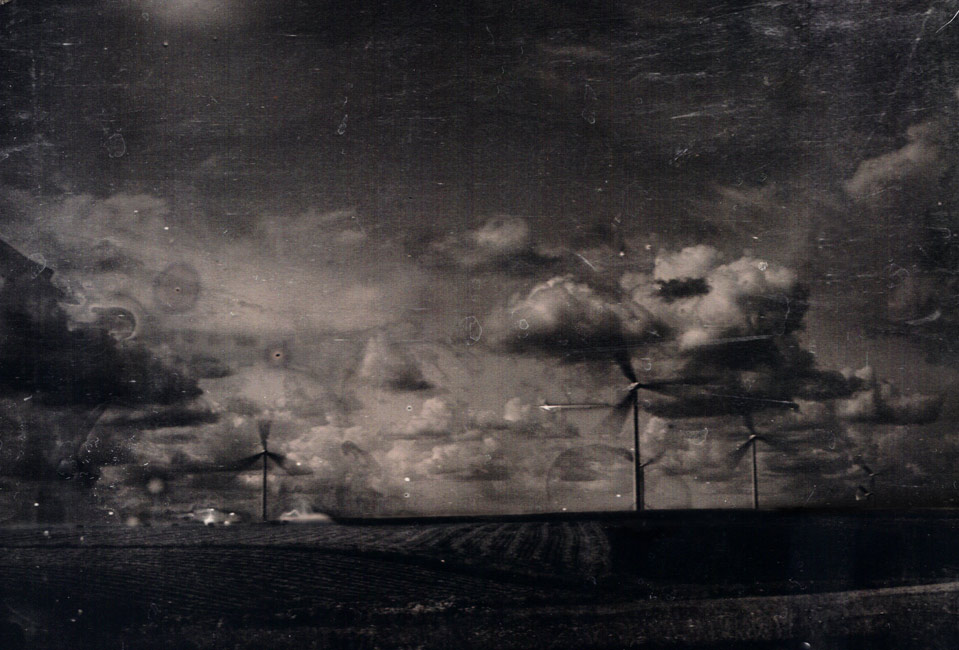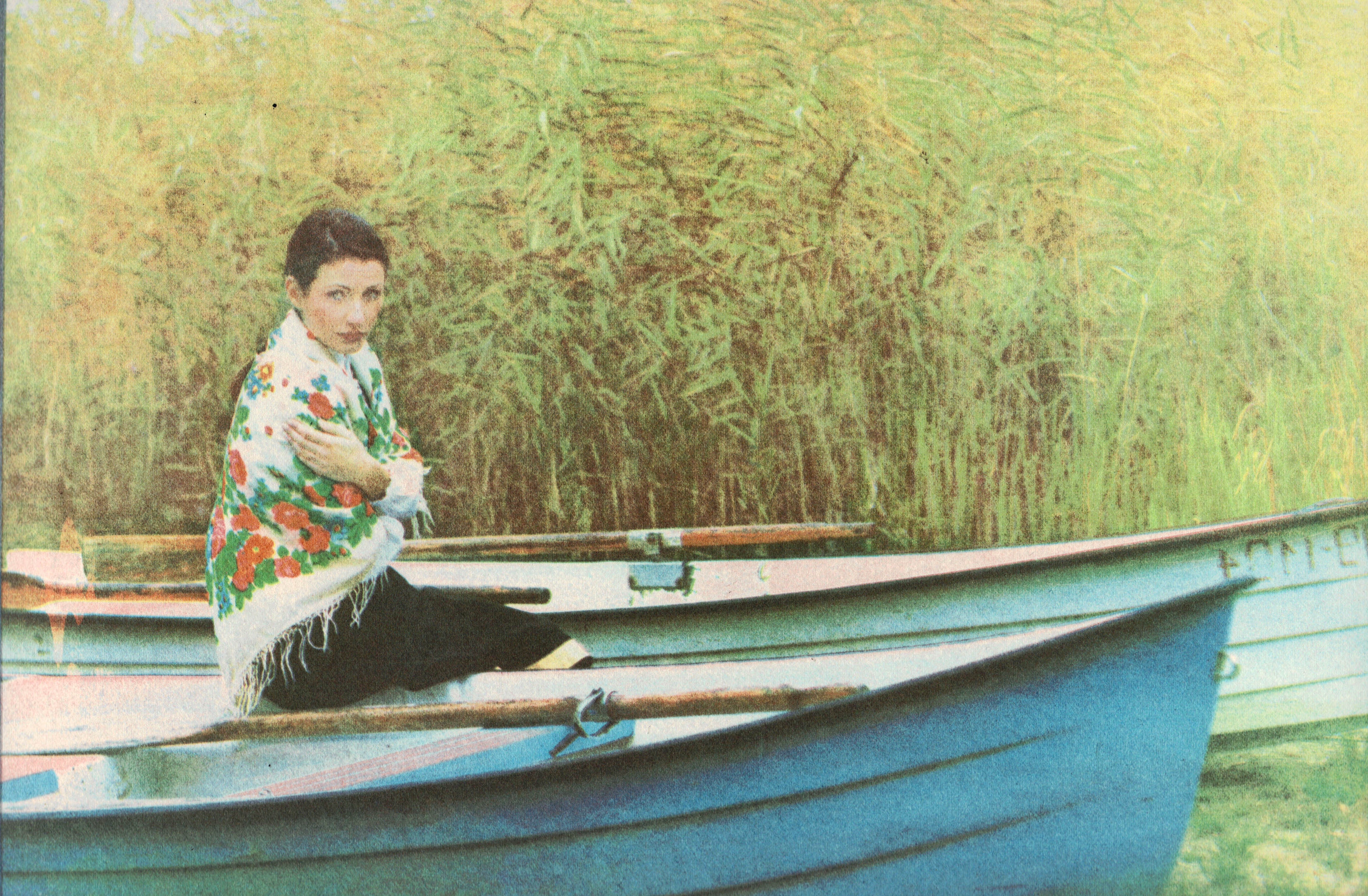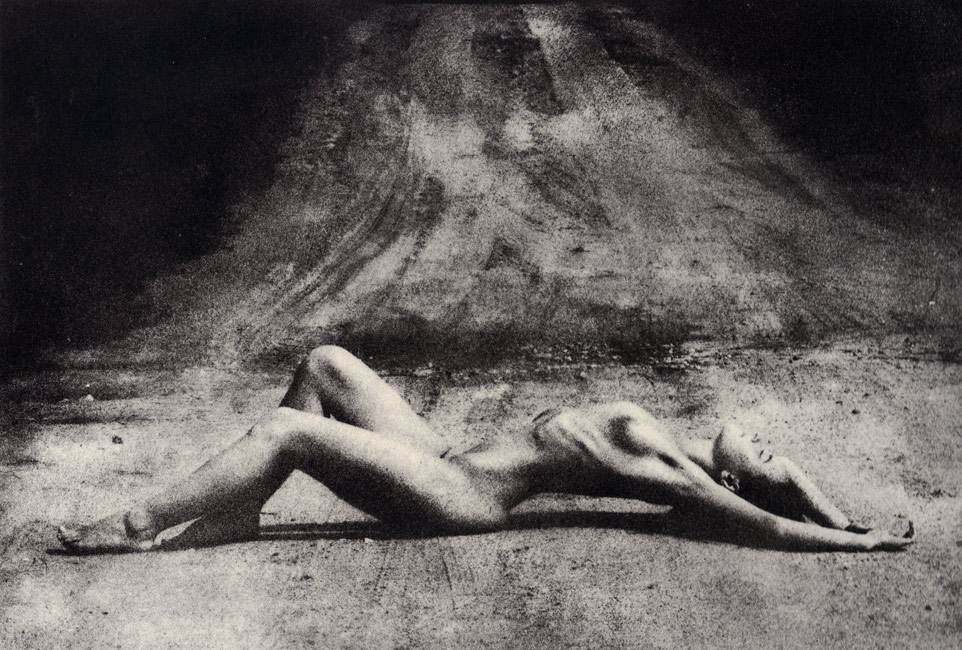
Vandyke brownprint is one of the beautiful photographic processes coming from the 19th century, a process allowing us to make prints at home, without a professional darkroom or complicated equipment. Differently than the other popular process from the past, the cyanotype, it enables us to produce prints of pleasing, brownish colour. Similarly to other historical processes, it enables us to create prints of excellent permanence even if a lot of myths have arisen around this process that claim something opposite. Myths resulting only from incorrect or sloppy processing or the use of materials of inadequate quality, i.e. something that can easily be avoided with but a little learning. For all of you who would like to master this exquisite photographic process, I have prepared an introductory workshop that will offer an opportunity to learn its basics and acquire skills necessary to produce beautiful, archival prints. During the workshop you will learn: learn different ways to coat paper with the light sensitive solution, learn to prepare your own light sensitive materials, learn to prepare digital negatives based on digital images, to create a home lab, to expose your prints correctly, to assess exposure prior to development, to process the prints correctly to mount prints for exposure. The workshop will be based on demonstration accompanied by a detailed explanation. It will be held as a video conference so there will be plenty of opportunities to ask questions or simply discuss the process as would normally happen during a workshop in the lab. Participants who already have the materials and equipment will be able to make their own prints under online supervision...
For all film lovers, the moment when they learn to develop their own negatives is a breakthrough, a milestone on the road towards creative independence. Developing your own film is not only a source of huge satisfaction and considerable financial savings, but above all, it gives you a new, higher level of control over your photographs. From this moment on, you alone will be responsible for all the mistakes and, above all, for every successful image. What is more, you will get a tool to adjust the negatives used to your individual needs by, to name just one method, push processing them and thus altering their contrast or correcting minute errors of exposure. First of all, however, you will no longer depend on a lab, you will no longer get anxious about the possibility that an error of a total stranger may destroy your fabulous pictures. And you will no longer need to worry whether an imperfection results from your error or that of the lab. Gaining the ability to develop your own black and white film is particularly attractive as it is relatively easy, does not require complicated equipment or expensive chemicals and can easily be done at home thus saving unnecessary expenditure and providing great fun for the photographer. For those of you that would want to take this step now, I have prepared a four-hour online workshop during which you will be able to gain all the skills necessary to start developing your black and white negatives at home. During the workshop you will: learn about the chemistry used to develop black and white negative films,...
Many photographes feel really nostalgic about the chloride papers that were still manufactured in the late 1990’s. Despite their low speed that require contact printing, they offered unrivalled image quality. Quality so perfect that, even though they disappeared from the market back in 1990’s, we still keep getting asked about their availability. Others are equally nostalgic about the POP (print out papers) materials. And even though these papers stayed in manufacture for a long time, in the US until the early days of the 21st century, they too eventually disappeared from the market. Fortunately, at least the last type is probably the easiest photographic emulsion to make and even those of us who don’t have considerable experience and a professionally equipped lab can make them on their own. Though working in a home darkroom we might find competing with factory made materials difficult (if this is our aim of course), still the materials we make under such conditions will enable us to get magical results And even making photographic papers only marginally different than the factory made ones will prove possible with minimal experience. For everyone interested in this magical process we have prepared a workshop that will enable you to discover the secrets of preparing and using chloride POP emulsions both in their gelatin and collodion versions. The programme of the workshop includes: preparing a silver gelatine chloride POP emulsion learning the basics of emulsion making at the same time, preparing a collodio-chloride POP emulsion, learning different methods of coating emulsion on paper and similar substrata, learning to process POP papers including their toning, learning the most important...
Discover one of the most potent tools in photographic history; the view camera. Learn to use various types of view cameras as well as advanced methods of large format photography such as, for example, in camera perspective control. Discover the commercially available as well as self made materials, and their properties , take pictures both using negatives and inverse developing photographic paper to create unique, in camera, positive prints without the negative. Discover the secrets of a camera essential for historical photography passionates who want to shoot wetplate or glass plate negatives, of a camera, that is still used in some of the best commercial studios. For over a hundred years, the view camera has been the tool of leading photographers. It was the view camera that was used to make virtually all 19th century images as well as most of the 20th century masterpieces. Even today, in the age of digital photography, it offers unmatched image quality and is still used, albeit usually with a digital sensor, in leading advertising studios or in atteliers of outstanding photographers such as Paolo Rovesi. Even the American government, who have recently advertised a 100 000 USD a year job for a view camera photographer, is convinced of the advantages of analog large format photography. Curiously enough the format was recently espoused by the digital world where not only digital backs (that are not truly large format) are available but also cameras with a sensor that is truly 8×10 inches. Unfortunately, for many people large format photography, using a view camera, seems to be something difficult, incomprehensible, complicated, almost impossible to master,...
Silver gelatin dryplate, which was the real beginning of the silver based photography as we know it, is probably one of the most difficult challenges that a person passionate about historical processes can face. In order to make our own glass plate negatives we have to overcome a large number of difficulties; starting with obtaining appropriate materials, through the making the emulsion itself to the final coating of the negative and processing the exposed plates so as to make the best use of their speed without damaging the delicate layer of gelatin emulsion. Despite all these difficulties, making your own negatives is the only way if we want to recreate the appearance of the photographs from the turn of the 19th and 20th centuries; pictures recorded on glass plates coated with a thick layer of emulsion, emulsion which disperses light very different than modern negatives. Such negatives lack a lot of advantages of the modern materials, are colour blind or orthochromatic. At the same time they imbue the image with a magical quality unavailable to modern products. During the intensive, four day workshop, participants will acquire all the skills necessary to make their own emulsions and glass plate negatives. They will: learn about available materials for home emulsion making, learn to use the emulsion making equipment, learn about the basic processes taking place during the emulsion making as well as the importance of each stage for the resulting product, make a colour blind negative emulsion using modern photographic gelatins. learn to adapt pre-war recipes for use with modern materials. learn to control the speed and fogging of resulting materials,...
Alternative Photographic Supplies Training Centre is a perfect place to learn the intricacies of old photographic processes. We run workshops covering most historical processes first of all guaranteeing professional tuition, knowledge and experience; also in teaching. Our workshops and individual courses are a fantastic opportunity to learn the processes of your choice from an experienced tutor in a fully equipped darkroom. This is frequently combined with an opportunity to build your portfolio during the workshop itself. Since August 2014 our Centre has moved to new premises in Gdynia at 34 Wierzbowa St, shared with the Tricity School of Photography. This enables us to broaden the list of workshops available, especially as our new premises are an independent building surrounded by our own garden, a building where we can use a spacious studio as well as three darkrooms, including one prepared especially for researching old photographic processes an formulas. Our new premises can be seen here: https://www.google.com/maps/place/Wierzbowa+34/@54.479322,18.547947,14z/data=!4m2!3m1!1s0x46fda097819393a7:0xb717617b26d375bb?hl=pl-PL We are opening in August with the first workshops in its second...
Join our oilprinting workshop and discover the magic of one of the most painterly and at the same tie creative photographic processes. Learn the method used by the greatest masters of pictorial photography, who ‘painted’ their photographic masterpieces not only with light but also with a paintbrush. Enter the world of physical, tangible photography intricately worked with paint handcoated on the matrix. Oilprint, along with its sister technique of bromoil are among the most beautiful manipulative processes associated with pictorial photography and the American photosecession. It is a painterly technique which, like few others, allows for a huge level of image manipulation and thus self expression. It’s enough to say that this was the technique of choice of such masters as Gertrude Kasabier. During the two day workshop participants will acquire all the skills necessary to start independent work with this beautiful technique. We will: learn to prepare papers for oilprinting. This way we will once and for all free ourselves from the necessity to hunt down the papers suitable for bromoil printing. learn to sensitize the papers and prepare a matrix for further oilprinting. will learn the difficult art of inking the matrix so as to bring out and manipulate the image. learn to protect the delicate surface of the prints from mechanical damage in order to ensure their maximum permanence. We will also learn what tools can be used to create oilprints and practice using them The following will be provided during the workshop: fully equipped darkroom for our practice, papers prepared for oilprinting, papers suitable for preparing oilprinting papers, printing inks, all tools necessary for creating...
The first print making technique ever was the saltprint, and the albumen print was the first technique that made a real, industrial scale career dominating photography for dozens of years. Suffice it to say, that just one factory making albumenized paper used seventy thousand eggs per day. Both techniques may seem to be simple , in reality, however, it requires considerable knowledge and care in order to get the best results, especially if we aim at full control over the contrast and colour of the print. We offer a two day practical workshop during which we will not only learn to make salt and albumen prints, but also the more advanced elements of both processes. We will learn a variety of recipies including arrowroot paper and mat albumen, to control the print contrast and use a variety of toners. During the workshop we will learn to: Prepare matt and glossy albumenized paper using a variety of recipes, prepare salted paper using different recipes and sizes, increase the image contrast, sensitize the albumenized paper and the salted paper, expose and process the prints, prepare negatives for both processes (both large format and digital negatives), tone the prints, prepare the images for presentation in a conservator friendly, archival way. We also provide an opportunity to print your own negatives (including printing negatives from your own digital files) and to prepare photos in our studio should you wish to do so. The following will be provided for all the participants: materials necessary for salt and albumen printing including toners, papers appropriate for the techniques, albumenized papers, all necessary tools, UV light sources, practice negatives, a...
It seems my fate to make things that were not meant to happen. When I was going to Syria in 2008 the last thing I had in mind was documentation. It was meant to be an adventure, a journey of discovery, a photographic experience, but I never thought the pictures would gain unexpected documentary value. Unfortunately, with civil war raging there for years I suspect quite a few of the objects I photographed exist only in pictures. Maybe this is the reason for the most archival technique; gum bichromate....
Actually, they were there before I went alternative. I spent something like four years shooting nudes, ended up publishing a book on nude photography and getting exhibited around Poland. But then…. then the two passions overlapped and I ended up doing this; a series of platinum prints. Or should I say combination platinum/palladium prints with an extra touch of gum. There was a time, when I thought of this as a sort of an end, a moment I leave nudes behind to do something else. Now I know it was just a beginning; a beginning of a totally different sort of nude photography. ...
Recent Comments